
By Asaye Bankole
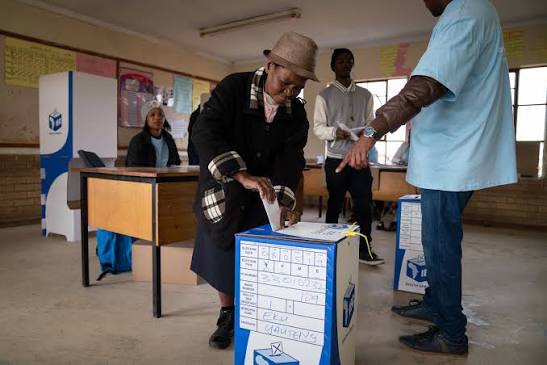
South Africans on Wednesday, November 4, 2026, headed to the polls in local government elections amid growing public dissatisfaction over poor infrastructure, unemployment, water shortages and persistent electricity problems.
The election is expected to test the popularity of major political parties as they compete for control of key cities and municipalities ahead of the 2029 general election.
Polling stations opened at 7:00 a.m. and were scheduled to close at 9:00 p.m., with more than 29 million registered voters eligible to participate.
The election comes amid widespread frustration over deteriorating public infrastructure, persistent inequality and an unemployment rate exceeding 30 per cent.
In Langa, Cape Town’s oldest township, 50-year-old voter Thembinkosi Somana called for improved living conditions and more employment opportunities, saying citizens should no longer be subjected to economic hardship.
In Johannesburg, Andrea Smith, 41, who voted alongside her husband and child, expressed hope that the election would bring improvements, particularly in electricity and water supply.
Voter participation remains a major concern following the 2021 municipal elections, which recorded a turnout of just 46 per cent.
The Electoral Commission disclosed that approximately 1.4 million people had cast special votes out of the 2.6 million approved for the exercise over two days.
The ruling African National Congress (ANC), which led the country’s struggle against apartheid, is projected to remain the largest political party nationally, although opinion polls indicate a possible further decline in its support.
The party lost its outright national majority for the first time during the 2021 municipal elections, before suffering another major setback in the 2024 general election, when it secured slightly above 40 per cent of the votes.
The result forced the ANC to form a Government of National Unity with nine other political parties.
The Democratic Alliance (DA), the country’s second-largest political party, is targeting Johannesburg, hoping to capitalise on public dissatisfaction with the ANC’s handling of municipal services.
Meanwhile, former President Jacob Zuma’s uMkhonto weSizwe (MK) Party is seeking to strengthen its position in Durban, where it has mounted a strong challenge.
The party secured 14.5 per cent of the national vote in the 2024 general election, emerging as the country’s third-largest political force after attracting support from the ANC.
Zuma, speaking at a political gathering in Durban on Sunday, expressed confidence in his party’s chances, saying it would begin its effort to reclaim the country from the coastal city.
Anti-immigrant sentiment has also featured prominently in the election campaign, particularly in Durban, where migration has become a major political issue.
The election is expected to produce coalition governments in several municipalities, as no single party is certain of securing an outright majority in some major cities.
Under South Africa’s local government system, voters elect municipal councillors, who subsequently choose mayors and form administrations responsible for running their respective municipalities.
According to the Mapungubwe Institute for Strategic Reflection, 74 of the country’s 257 municipalities were operating under coalition governments or minority administrations as of February 2026.
The final results are expected on Sunday and will provide an indication of the country’s political direction ahead of the 2029 general election.
The outcome is also expected to influence the future of the ANC, which is scheduled to elect a new leader at its national conference in December 2027.
Political analyst and former diplomat Kingsley Makhubela said the election would largely be determined by issues affecting residents’ daily lives, including access to water, electricity, good roads and proper sewage systems.
He said voters were increasingly concerned about practical governance issues rather than political sentiments or party loyalty.
Makhubela also suggested that the growing influence of coalition governments could encourage political cooperation and tolerance among parties in South Africa’s increasingly fragmented political environment.
COMMENTS