
By Asaye Bankole
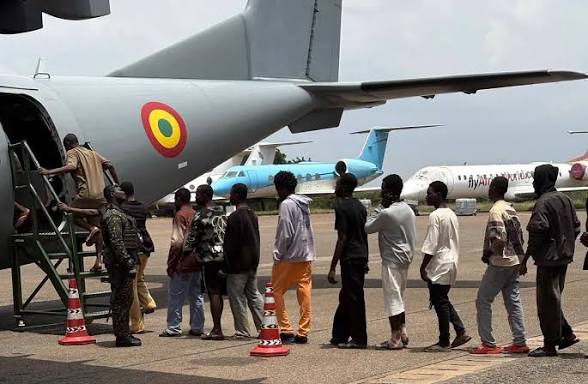
Ghana has repatriated 120 Nigerian nationals arrested during a major cybercrime operation after authorities alleged that they had been trafficked to the country and forced to participate in online criminal activities.
Ghana’s Minister for Communication, Digital Technology and Innovations, Sam George, announced the development on Tuesday through a statement posted on his official X account.
The operation, known as Operation Cyberhunt, was led by Ghana’s Cyber Security Authority in collaboration with intelligence and security agencies from Ghana, Nigeria, the United Kingdom and the United States.
According to George, the operation resulted in the rescue of the 120 Nigerians, who were allegedly trafficked to Ghana and compelled to work in cybercrime centres.
The minister thanked the Ghana Air Force and the Ministry of Defence for their roles in facilitating the repatriation of the affected Nigerians.
Security Operatives Recover Laptops, Phones, Passports
During the operation, security personnel recovered 136 mobile phones, 130 laptops, internet connectivity devices and four vehicles. One of the vehicles was reportedly stolen from Canada.
Other items seized included digital equipment, valuable jewellery and 10 Nigerian passports.
George disclosed that eight additional individuals were being processed for prosecution as investigations into the alleged cybercrime activities continued.
The authorities have yet to disclose further details about the identities of the suspects or the specific cybercrime activities under investigation.
Ghana Warns Cybercriminals
The minister reiterated the Ghanaian government’s determination to prevent the country from becoming a safe haven for cybercriminals.
He stressed that the administration of President John Dramani Mahama would continue to strengthen efforts to combat cybercrime through cooperation with local and international security agencies.
Operation Cyberhunt reflects growing regional and international collaboration against cybercrime and human trafficking, particularly cases involving the alleged exploitation of individuals recruited or transported across national borders.
The repatriation of the 120 Nigerians also highlights concerns about the trafficking of vulnerable people and allegations that some victims are forced to participate in criminal operations.
Meanwhile, investigations are continuing, with eight other individuals facing possible prosecution over their alleged involvement in the activities uncovered during the operation.
COMMENTS