
FG Orders Petrol Marketers to Reflect Lower Fuel Costs in Pump Prices
The Federal Government has directed petroleum marketers to reduce petrol prices in line with declining global crude oil prices, warning against using old, high-cost fuel inventories as an excuse to keep pump prices elevated.
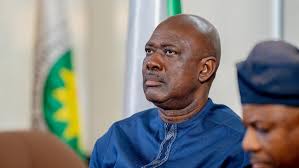
The directive was issued during a stakeholders’ meeting on cost-reflective pricing of Premium Motor Spirit (PMS), convened by the Nigerian Midstream and Downstream Petroleum Regulatory Authority (NMDPRA) in Abuja. The meeting brought together key players in the downstream oil sector, including representatives of Dangote Petroleum Refinery, the Federal Competition and Consumer Protection Commission (FCCPC), and major petroleum marketers.
Speaking at the meeting, the Minister of State for Petroleum Resources (Oil), Senator Heineken Lokpobiri, said the benefits of lower replacement costs should be passed on to consumers as marketers replenish fuel stocks at cheaper rates.
He acknowledged that petrol pricing is influenced by several factors, including exchange rates, logistics and supply chain costs, but stressed that temporary profits made from fuel purchased at higher prices should not be used to justify prolonged high pump prices.
Lokpobiri noted that while global crude oil prices have dropped significantly in recent months, domestic petrol prices have not fallen proportionately. According to him, PMS, which peaked at about ₦1,596 per litre in May, currently sells for around ₦1,296 per litre, a reduction he described as insufficient considering prevailing market conditions.
The minister warned that maintaining unjustifiably high fuel prices could worsen inflation, increase transportation and production costs, and slow Nigeria’s economic recovery.
He reaffirmed the Federal Government’s commitment to protecting consumers in the post-subsidy era, stating that deregulation was introduced to promote competition and efficiency rather than create opportunities for excessive pricing.
Lokpobiri also directed the NMDPRA to strengthen market surveillance and enforce pricing transparency across the downstream petroleum sector to ensure that reductions in procurement costs are promptly reflected in ex-depot and retail prices.
In his remarks, NMDPRA Chief Executive, Rabiu Umar, said the meeting was convened to address concerns over the disconnect between falling global crude oil prices and domestic petrol prices. He expressed optimism that collaboration between regulators and industry operators would lead to fair pricing while ensuring business sustainability.
The meeting later proceeded into a closed-door session, with stakeholders expected to reach resolutions aimed at improving transparency and ensuring consumers benefit from favourable market conditions.
COMMENTS